

Oct . 05, 2025 23:15 Back to list
CE certification 250 micron stainless steel mesh: SS316?
What CE Certification Really Means for 250 Micron Stainless Steel Mesh
When engineers ask me about ce certification 250 micron stainless steel mesh, they’re usually knee-deep in a project: a filter pack for solvent recovery, a pre-screen for a pharmaceutical centrifuge, or a food-grade strainer that must survive cleaning cycles. And yes, CE comes up fast—because in the EU, assemblies with mesh are often placed on the market under directives that require CE marking (think Pressure Equipment, Machinery, or Construction Products). The mesh itself, to be honest, doesn’t “get” CE in isolation; it underpins a CE-marked system with traceability, materials compliance, and reliable test data.
Product at a Glance
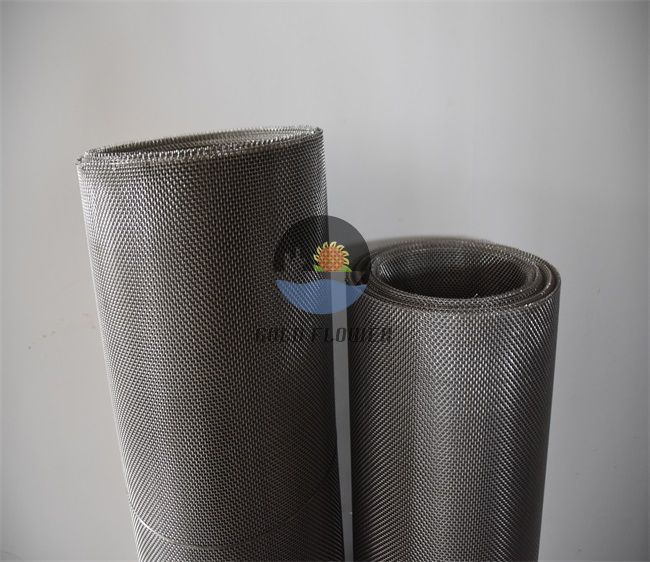
Wire Mesh for chemical from East Industry, Anping City, Hebei, China, is built in SUS302/304/316/304L/316L and woven in Plain, Twill, or Dutch patterns. Features? Acid/alkali/heat/corrosion resistance—exactly what chemical processors expect. In practice, many customers say 316L balances corrosion resistance with weldability and low carbon for clean-room duty. For ce certification 250 micron stainless steel mesh, 316L plain weave is the everyday workhorse.
| Spec Item | Typical Value (≈ / real-world may vary) |
|---|---|
| Material Grades | SUS302, 304, 316, 304L, 316L (per EN 10088 / ASTM A240) |
| Weaves | Plain, Twill, Dutch (ISO 9044 / ISO 4783 classification) |
| Nominal Opening | 250 µm (0.25 mm) |
| Mesh Count (plain weave) | ≈60 mesh with ≈0.173 mm wire; open area ≈35% |
| Width / Length | 1.0–1.5 m width; 30 m rolls (custom on request) |
| Tolerances | ASTM E2016 standard grade or special grade on demand |
| Surface / Cleanliness | Degreased & passivated (ASTM A967), optional electropolish |
| Certificates | EN 10204 3.1 MTC, RoHS, REACH; food contact on request (EU 1935/2004) |
Process Flow, Testing, and Service Life
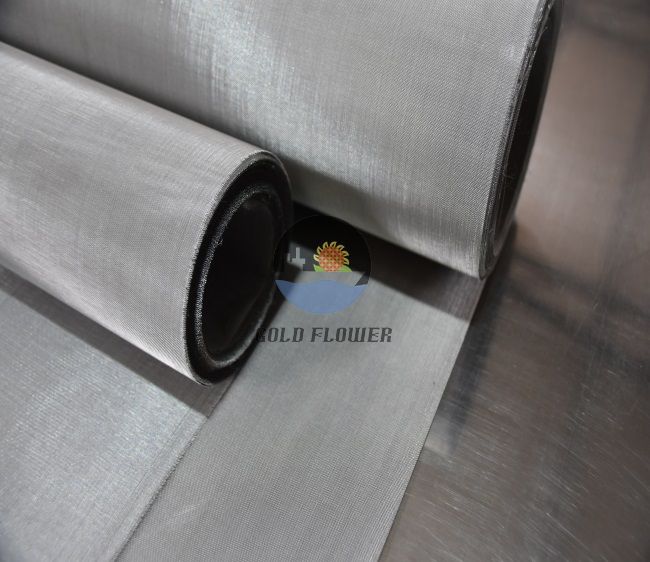
Materials are drawn wire (ASTM A580) → precision weaving (ISO 9044) → anneal/flatten → ultrasonic degrease → passivation → dimensional and aperture tests (ASTM E2016) → packaging with heat-seal film and traceable labels. For aggressive media, labs often add ISO 9227 salt spray and ferrite checks for 316L purity. Illustrative test data: salt spray >240 h (no red rust), burst strength ≈1.2–1.6 MPa (60 mesh, plain), particle retention D90 ≈250 µm in water at 0.5 bar. In chemical duty, service life ranges 3–8 years, frankly depending on chloride load and cleaning SOPs.
Where it’s Used (and Why)
- Chemical: solvent recovery filter packs, catalyst retention (PED assemblies), corrosion-prone lines.
- Pharma: centrifuge pre-screens, API slurries—documentation really matters here.
- Food & beverage: mash tuns, syrup screening (EU 1935/2004 compliance possible).
- Machine making: suction strainers, hydraulic return-line filters.
- Mine & petroleum: sand control pre-screens, often backed by Dutch weave layers.
Case notes I’ve seen: a brewery moved to ce certification 250 micron stainless steel mesh 316L and shaved 18% CIP downtime; a pharma plant swapped to Dutch-under-plain composite for better retention; a solvent recycler met PED documentation by pairing 3.1 MTC with pressure-vessel CE paperwork.
Vendor Comparison (real-world buyer notes)
| Vendor | Certs & Traceability | MOQ | Lead Time | Notes |
|---|---|---|---|---|
| Wire Mesh BST (Anping) | EN 10204 3.1, RoHS/REACH, options for food-contact docs | ≈1 roll | 2–4 weeks | Strong on custom weaves and cut circles |
| EU Stockist B | Good CE documentation support for assemblies | Low | Stock/next-day | Higher price, great logistics |
| Generic Import A | Basic MTC; limited RoHS/REACH evidence | 3–5 rolls | 4–8 weeks | Good price; variable tolerances |
Customization and CE Context
For ce certification 250 micron stainless steel mesh inside a CE-marked system, spec the documentation pack early: 3.1 MTC, material grade mapping to EN 10088, RoHS/REACH statements, and, when applicable, food-contact declaration. Options include laser-cut discs, multilayer sintered packs, edge welding, and electropolishing. Your integrator then compiles the technical file and Declaration of Conformity for PED/Machinery as relevant.
Customer feedback: “Aperture uniformity was on point; our dP stayed stable over 6 months,” said a downstream operator. Another noted, “Documentation made our CE dossier easier than expected.” That’s not flashy, but it’s what gets audits signed off.
Citations
- ISO 9044: Industrial wire screens and woven wire cloth.
- ASTM E2016/E2016M: Standard Specification for Industrial Woven Wire Cloth.
- EN 10204: Metallic products — Types of inspection documents (3.1 MTC).
- EN 10088-1: Stainless steels — List of stainless steels.
- ISO 9227: Corrosion tests in artificial atmospheres — Salt spray tests.
- Regulation (EC) No 1907/2006 (REACH) and EU RoHS 2011/65/EU.
- Directive 2014/68/EU (PED) and Machinery Directive 2006/42/EC (for assemblies).
- EU 1935/2004: Materials intended to come into contact with food.
share
Latest news
-
The Complete Guide to Decorative Mesh for B2B Decision Makers
NewsDec.08,2025
-
Weave Mesh Solutions for Industrial Applications | Wire Mesh BST
NewsDec.08,2025
-
Crimped Mesh: Durable, Versatile Metal Mesh for Global Industrial & Humanitarian Use
NewsDec.08,2025
-
Copper Mesh for Industrial Use – Reliable & Customizable Solutions
NewsDec.08,2025
-
Brass Mesh Solutions for Industry | Wiremeshbst.com Durable & Customizable
NewsDec.07,2025
-
Durable Wire Screen Solutions for Industrial Applications | WireMeshBST
NewsDec.07,2025
 English
  Belarusian
  Czech
Czech  Danish
  Dutch
Dutch  Esperanto
  Finnish
  French
  German
  Hungarian
  Icelandic
  Irish
Irish  Italian
  Norwegian
  Polish
  Russian
  Spanish
  Swedish
  Turkish
  Ukrainian