

Sep . 09, 2025 20:00 Back to list
CE Certified 250 Micron Stainless Steel Mesh for Quality & Precision
In the demanding landscape of modern industrial applications, the integrity and performance of filtration and separation media are paramount. For sectors ranging from petrochemical processing to advanced screen printing, the specification of materials that meet stringent regulatory and operational requirements is not merely a preference but a necessity. This article delves into the critical aspects of ce certification 250 micron stainless steel mesh, examining its manufacturing precision, technical advantages, diverse applications, and the rigorous standards that underpin its reliability in global markets. While this article focuses on the specific benefits and applications of stainless steel mesh, our commitment to high-performance materials extends to specialized alloys like 0Cr23Al5 Nichrome Mesh, catering to an even broader spectrum of industrial requirements.
Industry Trends and Market Dynamics for High-Performance Mesh
The global industrial mesh market is experiencing robust growth, driven by increasing demands for efficiency, durability, and compliance across various sectors. Key trends include a heightened focus on corrosion resistance, particularly in harsh environments, and the need for precision filtration in advanced manufacturing. Regulatory frameworks, such as CE certification, are becoming increasingly vital, ensuring that products meet essential health, safety, and environmental protection requirements within the European Economic Area. This is especially true for materials like ce certification 250 micron stainless steel mesh, which finds applications where both mechanical strength and chemical inertness are critical. The proliferation of advanced processing techniques in industries like water treatment, chemical engineering, and food & beverage further fuels the demand for high-grade stainless steel wire mesh. The shift towards sustainable practices also emphasizes products with extended service life, reducing waste and operational downtime.
Furthermore, the market for specialized meshes, including ce certification wire mesh ss 316 and ce certification stainless steel wire mesh for screen printing, is expanding due to technological advancements. These advancements enable manufacturers to produce meshes with incredibly precise aperture sizes and uniform weave patterns, which are essential for applications requiring high-resolution separation or fine particle filtration. The increasing complexity of industrial processes necessitates materials that can withstand extreme temperatures, pressures, and corrosive agents, positioning stainless steel as a material of choice.
Technical Specifications and Materials Science
Stainless steel, particularly grades like 304, 316, and 316L, offers an exceptional combination of mechanical properties and corrosion resistance. For 250 micron mesh, the selection of the correct stainless steel alloy is paramount. SS 304 (UNS S30400) provides good general corrosion resistance, while SS 316 (UNS S31600) and SS 316L (UNS S31603) offer enhanced resistance to pitting and crevice corrosion, especially in chloride-rich environments, due to their molybdenum content. The "250 micron" specification refers to the nominal aperture size (opening) of the mesh, translating to approximately 60 mesh count (wires per inch), crucial for precise filtration.
The performance of ce certification 250 micron stainless steel mesh is defined by several key parameters:
- Aperture Size: 250 µm (0.25 mm) ensures consistent particle retention or separation.
- Wire Diameter: Typically ranging from 0.16mm to 0.20mm for a 60-mesh screen, influencing open area and flow rate.
- Open Area: Percentage of open space within the mesh, directly affecting flow capacity and filtration efficiency. Higher open area generally means higher flow.
- Weave Pattern: Plain weave is common for this mesh size, providing stable and uniform openings. Twill weave offers greater strength and finer filtration.
- Tensile Strength: Ability to withstand stretching forces without breaking, crucial for structural integrity under pressure.
- Corrosion Resistance: Resistance to chemical degradation, particularly important in petrochemical and marine environments.
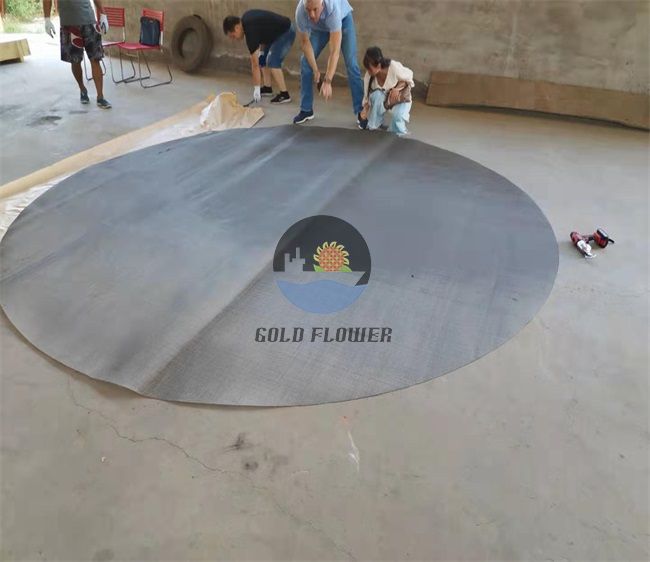
Typical Product Specifications for 250 Micron Stainless Steel Mesh (SS316)
| Parameter | Value/Description |
|---|---|
| Material Grade | SS304, SS316, SS316L (Commonly SS316 for enhanced resistance) |
| Mesh Count (per inch) | Approx. 60 Mesh |
| Aperture Size | 250 µm (0.25 mm) |
| Wire Diameter | 0.16 mm - 0.20 mm |
| Open Area | Approx. 40-48% (Varies with wire diameter) |
| Weave Pattern | Plain Weave (Standard), Twill Weave (for strength) |
| Tensile Strength (MPa) | Typically 520-720 MPa (for SS316 wire) |
| Operating Temperature | Up to 870°C (Continuous for SS316) |
| Certification | CE, ISO 9001 (for manufacturing process) |
Manufacturing Process Flow for CE Certified Stainless Steel Mesh
The production of high-quality, CE certified ce certification 250 micron stainless steel mesh involves a meticulously controlled process to ensure uniformity, strength, and adherence to precise specifications.
- Material Selection & Sourcing: High-grade stainless steel wire rods (e.g., SS304, SS316, SS316L) are sourced from certified mills. Material chemical composition is verified against international standards like ASTM A276.
- Wire Drawing: The rods undergo a multi-stage cold drawing process to achieve the precise wire diameter required for the 250 micron mesh (e.g., 0.18mm). This process enhances tensile strength and surface finish.
- Annealing (Optional/Dependent): For some applications, intermediate annealing might be performed to relieve stress and improve ductility, making the wire more suitable for weaving.
- Weaving Preparation: Warping machines prepare the longitudinal (warp) wires, while spools are readied for the transversal (weft) wires.
- Precision Weaving: Utilizing advanced automated weaving looms, the warp and weft wires are interlaced to create the mesh. The loom settings are calibrated to ensure a consistent 250 micron aperture size and uniform weave pattern. For fine meshes, specialized weaving techniques are employed to maintain precise openings.
- Cleaning & Surface Treatment: The woven mesh is cleaned to remove any oils, dirt, or contaminants from the manufacturing process. This may involve degreasing and passivation to enhance corrosion resistance and create a uniform surface.
- Cutting & Finishing: The mesh is cut to specified dimensions (rolls or sheets), and edges may be finished (e.g., selvaged, welded) to prevent fraying and ensure safe handling.
-
Quality Control & Testing:
- Visual Inspection: For weave defects, consistency, and overall appearance.
- Aperture Measurement: Digital microscopy or optical comparators are used to verify the 250 micron opening size, often to ISO 3310-1 or ASTM E11 standards.
- Wire Diameter Measurement: Micrometers are used for precision.
- Material Analysis: X-ray Fluorescence (XRF) or Spectrometry to confirm alloy composition.
- Tensile Testing: To ensure the mesh meets specified strength requirements (ASTM A370).
- Corrosion Resistance Testing: Salt spray tests (ASTM B117) or intergranular corrosion tests may be performed for critical applications.
- CE Marking & Packaging: Upon successful completion of all quality checks and compliance with relevant EU directives, the product is prepared for CE marking. It is then carefully packaged to prevent damage during transit and storage, often with protective layers and robust crating.
This rigorous process ensures that each batch of stainless steel mesh not only meets dimensional and material specifications but also adheres to the critical safety and performance criteria mandated by CE certification. Target industries, such as petrochemical, metallurgy, and water supply & drainage, rely heavily on this manufacturing precision for critical applications where advantages like energy saving through efficient filtration and superior corrosion resistance are paramount.
Application Scenarios and Technical Advantages
The versatility and robust performance of ce certification 250 micron stainless steel mesh make it indispensable across a multitude of industrial sectors. Its precise filtration capabilities, combined with the inherent properties of stainless steel, offer significant technical advantages.
- Petrochemical and Chemical Processing: Used in catalyst support, filtration of crude oil, gas, and various chemical solutions. The corrosion resistance of SS316 is crucial for handling aggressive media, minimizing downtime, and extending service life in environments where brass mesh or other less resistant metals would rapidly degrade.
- Water Supply & Drainage / Environmental Engineering: Employed in water treatment plants for particle filtration, wastewater screening, and as support for filter media. Its durability ensures long-term performance and reduced maintenance, contributing to energy saving by maintaining efficient flow rates.
- Food and Beverage Industry: Used for sieving, grading, and filtration of ingredients and products. CE certification implies compliance with food contact safety regulations in Europe, making it suitable for direct and indirect food applications.
- Pharmaceutical Industry: Critical for precision separation and purification processes, ensuring product purity and compliance with strict regulatory standards.
- Screen Printing: ce certification stainless steel wire mesh for screen printing offers excellent dimensional stability and precise mesh openings, leading to high-quality print resolution and consistency, even for fine details.
- Mining and Metallurgy: Used for ore screening, particle sizing, and material handling, including as a component in ce certification heavy duty wire mesh applications.
- Architectural and Decorative Applications: Often incorporated into modern designs for cladding, sunscreens, and partitioning, including uses as ce certification wire mesh pool fencing or ce certification square mesh wire fencing where aesthetics and durability are required.
- Aerospace and Automotive: For specialized filtration in fluid systems and component protection.
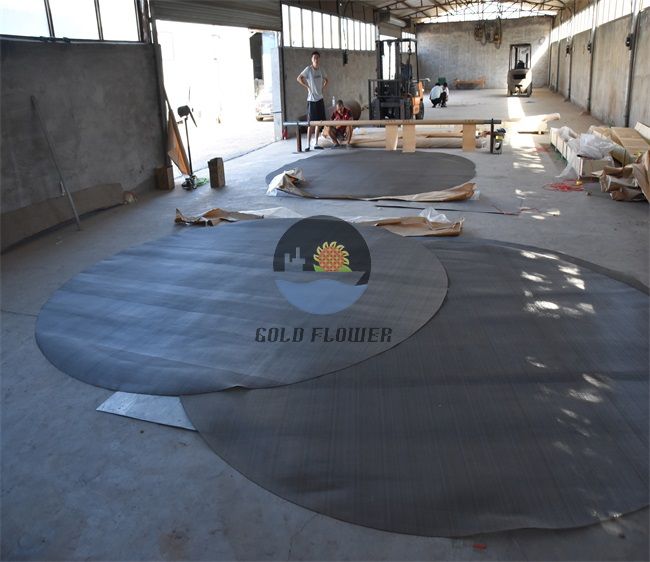
The technical advantages are manifold:
- Superior Corrosion Resistance: Especially with SS316, resisting oxidation, chemical attack, and rust in aggressive environments.
- High Temperature Tolerance: Maintaining structural integrity and filtration accuracy at elevated temperatures.
- Mechanical Strength & Durability: Withstands high pressure differentials and physical stresses, leading to longer service life compared to polymer meshes or finer metals like ce certification brass mesh.
- Precision Filtration: Consistent 250 micron apertures ensure reliable separation efficiency.
- Ease of Cleaning: Smooth, non-porous surface facilitates cleaning and sterilization, crucial for hygienic applications.
- CE Compliance: Guarantees adherence to European safety and performance standards, simplifying international procurement and deployment.
Vendor Comparison and Selection Criteria
Selecting the right supplier for ce certification 250 micron stainless steel mesh is crucial for ensuring product quality, operational reliability, and project success. Key factors for comparison extend beyond mere price and delve into areas of expertise, quality assurance, and service capabilities.
Critical Vendor Evaluation Points:
- Certification & Compliance: Verify CE marking validity, ISO 9001 certification for quality management, and adherence to specific industry standards (e.g., ASTM, DIN). A vendor's commitment to these standards directly reflects the quality of their ce certification 250 micron stainless steel mesh.
- Material Traceability: Ensure raw material provenance can be traced back to certified mills. This guarantees the chemical composition and mechanical properties of the stainless steel.
- Manufacturing Capabilities: Assess the precision of their weaving equipment, quality control during production, and capacity for both standard and custom orders.
- Technical Expertise & Support: A vendor should offer in-depth technical assistance, helping specify the correct mesh for unique applications, including advice on specialized products like ce certification metal fine mesh or ce certification fine steel mesh screen.
- Quality Control Protocols: Inquire about their internal testing procedures, including aperture analysis, wire diameter verification, and corrosion resistance checks.
- Lead Time & Logistics: Evaluate their ability to meet delivery schedules and handle international shipping, especially for time-sensitive projects.
- Customer Service & After-Sales Support: Responsiveness to inquiries, clear communication, and comprehensive warranty policies are indicators of a reliable partner.
Comparison Table: Key Differentiators Among Mesh Suppliers
| Feature | Supplier A (Typical) | Our Offering (Example) | Supplier B (Premium) |
|---|---|---|---|
| CE Certification | Yes (Basic) | Yes (Comprehensive) | Yes (Comprehensive) |
| ISO 9001 | Often | Always Certified | Always Certified |
| Material Grades Available | SS304, SS316 | SS304, SS316, SS316L, Duplex, Nichrome, etc. | SS304, SS316, SS316L, some alloys |
| Aperture Precision | Standard Tolerance | +/- 5% or better (ISO 3310-1) | +/- 5% |
| Customization Options | Limited | Extensive (Weave, Size, Edge, Fabrication) | Moderate |
| Technical Support | Basic | Dedicated Engineering Team | Good |
| Lead Time | Moderate (2-4 weeks) | Optimized (1-3 weeks for standard) | Can be long (3-6 weeks) |
Choosing a vendor who excels in these areas guarantees not only compliance but also optimal performance and long-term cost-effectiveness for your operations requiring precision meshes like ce certification 250 micron stainless steel mesh.
Customized Solutions and Application Case Studies
Beyond standard offerings, many industrial applications require custom-engineered mesh solutions. This includes variations in material alloy, weave pattern, specific dimensions, edge treatments (e.g., welded, folded, crimped), and post-processing treatments. We specialize in providing bespoke stainless steel mesh products, from small batch prototypes to large-scale production, tailored to exact client specifications and unique operational challenges. This capability extends to complex fabrications like ce certification stainless steel mesh box filters or custom-shaped screens.
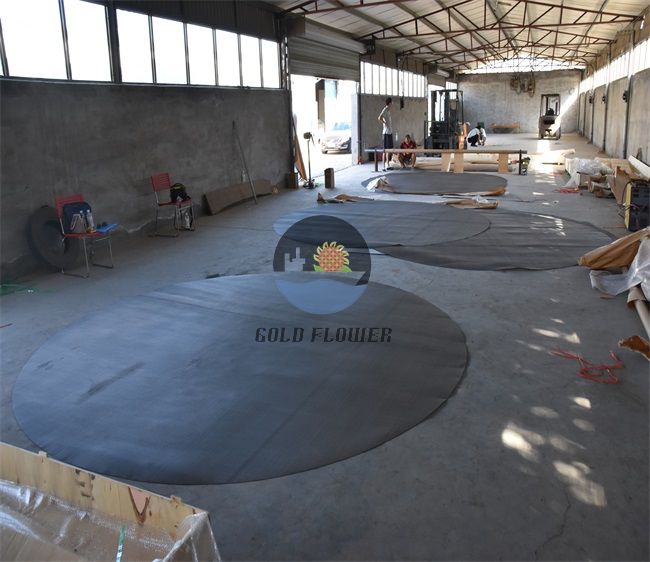
Application Case Studies:
-
Case Study 1: Enhanced Filtration in Chemical Processing
A major chemical manufacturer required a filtration medium for a highly corrosive organic solvent. Previous filters made from lower-grade stainless steel showed rapid degradation, leading to frequent replacements and significant operational costs. We engineered a custom ce certification 250 micron stainless steel mesh using SS316L with an optimized twill weave for increased mechanical strength and filtration efficiency. The CE certification provided regulatory assurance. After implementation, the client reported a 70% increase in filter service life, drastically reducing maintenance downtime and material expenses, alongside an observed energy saving due to consistent flow resistance.
-
Case Study 2: Precision Screen Printing for Electronics
An electronics firm, producing miniature circuit boards, faced challenges with inconsistent print quality using existing screen printing meshes. They needed a mesh with exceptionally tight aperture tolerances and superior dimensional stability. We supplied custom-fabricated ce certification stainless steel wire mesh for screen printing, precisely manufactured to a 250-micron aperture with a specialized plain weave. This resulted in a marked improvement in print resolution, fewer defects, and increased production yield, directly impacting their bottom line by reducing rework and waste.
-
Case Study 3: Durable Fencing for Marine Environments
A coastal industrial facility needed robust and corrosion-resistant perimeter fencing that could withstand harsh saline conditions. Standard galvanized fencing corroded quickly. We provided custom-fabricated ce certification wire mesh pool fencing and ce certification square mesh wire fencing made from heavy-gauge SS316 wire. While the primary keyword is 250 micron, this demonstrates the material's broader utility. The mesh was further treated for enhanced UV stability. This solution offered superior long-term durability and safety, requiring minimal maintenance even in the aggressive marine atmosphere.
These case studies underscore our capability to not only supply high-quality standard products but also to engineer and deliver specialized mesh solutions that address complex industrial requirements, backed by robust CE certification.
Ensuring Trustworthiness: Certifications, QA, Support
Establishing and maintaining trust is fundamental in B2B relationships. Our commitment to quality and customer satisfaction is demonstrated through rigorous adherence to international standards, transparent processes, and comprehensive support.
Authoritative Certifications & Quality Assurance:
Our products, including ce certification 250 micron stainless steel mesh, are manufactured under strict quality management systems compliant with ISO 9001. All relevant products carry the CE mark, signifying conformity with European health, safety, and environmental protection standards. We also adhere to material specifications such as ASTM (American Society for Testing and Materials) and DIN (Deutsches Institut für Normung) standards. Each batch undergoes comprehensive testing, including material composition verification, precise aperture size analysis, and tensile strength evaluations, ensuring every product meets or exceeds specified performance criteria. Test reports and material certificates are available upon request to substantiate quality claims.
Frequently Asked Questions (FAQ):
- Q: What does CE certification imply for stainless steel mesh?
- A: CE certification signifies that the stainless steel mesh product complies with the essential health, safety, and environmental protection requirements of relevant European Directives. For mesh products, this typically covers aspects related to structural integrity, material safety (e.g., for food contact), and appropriate manufacturing controls.
- Q: How do you ensure the 250 micron aperture size is accurate?
- A: We employ advanced optical comparators and digital microscopy during and after the weaving process. Measurements are conducted according to ISO 3310-1 and ASTM E11 standards to ensure the mesh openings are consistently within the specified tolerance for 250 microns.
- Q: Can your stainless steel mesh be used in high-temperature applications?
- A: Yes, stainless steel grades like SS316 can withstand continuous operating temperatures up to 870°C, and intermittently higher, while maintaining structural integrity. For even more extreme temperatures, we offer specialized alloys such as 0Cr23Al5 Nichrome Mesh, detailed on our product pages.
- Q: What is the typical lead time for custom orders?
- A: Standard stock items typically ship within 1-3 business days. For custom-engineered solutions, lead times vary based on complexity and volume, generally ranging from 2 to 6 weeks. We provide a precise lead time estimate upon quotation.
Lead Time and Fulfillment:
We understand the importance of timely delivery for industrial projects. Our streamlined production process and robust inventory management enable efficient fulfillment. Standard products are typically dispatched within 3-5 business days. For custom and large-volume orders, we provide transparent lead time estimates, communicating progress at every stage to ensure projects stay on schedule. We work with reputable logistics partners to ensure secure and prompt global delivery.
Warranty and Customer Support:
All our stainless steel mesh products are backed by a comprehensive warranty against manufacturing defects and material failures under normal operating conditions. Our dedicated customer support team and technical engineers are available to assist with product selection, technical inquiries, and any post-purchase support needs. We are committed to fostering long-term partnerships based on trust, quality, and unparalleled service.
Company Experience and Partnerships:
With over 15 years of experience in manufacturing high-performance wire mesh, we have cultivated a deep understanding of diverse industrial needs. Our long-standing relationships with global partners and clients in the petrochemical, water treatment, and manufacturing sectors are a testament to our consistent quality and reliability. We are proud to have contributed to numerous critical projects worldwide, supplying essential materials like ce certification 250 micron stainless steel mesh that stand the test of time.
Conclusion
The demand for high-performance industrial filtration and separation solutions continues to grow, with ce certification 250 micron stainless steel mesh emerging as a critical component in numerous demanding applications. Its exceptional corrosion resistance, mechanical strength, and precise filtration capabilities, combined with the assurance of CE certification, make it an indispensable choice for industries requiring reliability and adherence to strict regulatory standards. By understanding the intricate manufacturing processes, technical specifications, and diverse application scenarios, B2B decision-makers and engineers can make informed choices, ensuring optimal operational efficiency, extended service life, and sustained competitive advantage. Partnering with an experienced manufacturer committed to quality, customization, and comprehensive support is paramount to unlocking the full potential of these advanced materials.
References
- European Commission. "CE marking." https://ec.europa.eu/growth/single-market/ce-marking_en
- International Organization for Standardization (ISO). "ISO 9001 Quality management systems." https://www.iso.org/iso-9001-quality-management.html
- ASTM International. "Standards for Stainless Steel." https://www.astm.org/Standards/stainless-steel-standards.html
- ASM International. "Properties and Selection: Stainless Steels, Tool Materials and Special-Purpose Metals." Volume 3 of ASM Handbook.
- Wire Association International. "Wire and Cable Technical Handbook."
share
Latest news
-
The Complete Guide to Decorative Mesh for B2B Decision Makers
NewsDec.08,2025
-
Weave Mesh Solutions for Industrial Applications | Wire Mesh BST
NewsDec.08,2025
-
Crimped Mesh: Durable, Versatile Metal Mesh for Global Industrial & Humanitarian Use
NewsDec.08,2025
-
Copper Mesh for Industrial Use – Reliable & Customizable Solutions
NewsDec.08,2025
-
Brass Mesh Solutions for Industry | Wiremeshbst.com Durable & Customizable
NewsDec.07,2025
-
Durable Wire Screen Solutions for Industrial Applications | WireMeshBST
NewsDec.07,2025
 English
  Belarusian
  Czech
Czech  Danish
  Dutch
Dutch  Esperanto
  Finnish
  French
  German
  Hungarian
  Icelandic
  Irish
Irish  Italian
  Norwegian
  Polish
  Russian
  Spanish
  Swedish
  Turkish
  Ukrainian