

Oct . 06, 2025 08:15 Back to list
Why CE certification 250 micron stainless steel mesh 316?
If you’ve ever tried to spec a filter screen for high-heat duty and EU compliance, you’ll know the rabbit holes. That’s why I’ve been tracking ce certification 250 micron stainless steel mesh requests that, in reality, end up being FeCrAl for temperature headroom. A lot of buyers search “stainless,” but the winning play for hot zones is often 0Cr25Al5 (FeCrAl). In Anping City, Hebei—where wire mesh is practically a craft—East Industry’s 0Cr25Al5 fabric is having its moment.
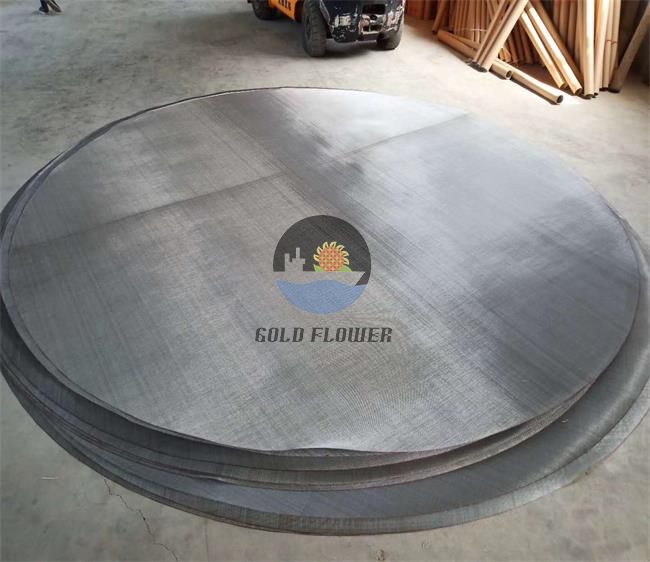
Trend-wise, plants that once ran 316L at 250 µm are switching to FeCrAl for oxidation resistance around 1100–1250°C. Stainless still rules in wet chem and corrosives, but in hot gas filtration or pre-burner screens, FeCrAl lasts longer, plain and simple—many customers say 1.5–2.5× service life in steady, clean atmospheres. That said, if you’re certifying an assembly for Europe, CE applies to the finished machine/pressure equipment; the mesh must ship with traceable materials and the right test records to slot neatly into your Technical File.
Quick specs (typical build)
| Product | 0Cr25Al5 High Temperature Resistance Wire Mesh |
| Material options | 0Cr25Al5, 0Cr23Al5 (FeCrAl); optional 316L for wet duty |
| Weaves | Plain, Twill, Dutch weave |
| Nominal aperture | ≈ 250 µm (real-world tolerance per ISO 9044) |
| Max operating temp | FeCrAl up to ≈1250°C; 316L typically ≤600°C |
| Electrical resistivity | FeCrAl ≈1.4–1.5 μΩ·m at 20°C |
| Roll width/length | Up to 1.5 m wide; 10–30 m per roll (custom) |
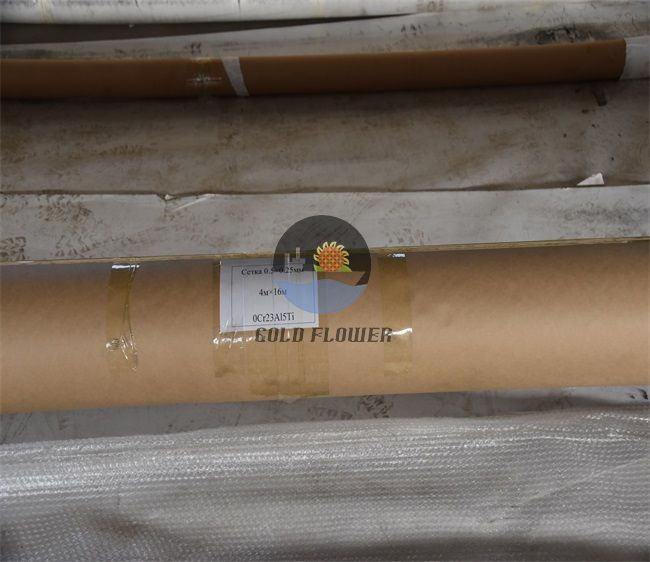
Process flow, the nutshell version: melt-sourced FeCrAl rod → drawing → anneal → precision weaving (plain or Dutch for better retention) → stress relief → cleaning/pickling → flatness set → dimensional audit. Aperture and wire diameter are checked to ISO 9044 / ASTM E2016; bubble-point or air-permeability tests per ASTM F316 can be run for filter validation. Typical service life? Around 8,000–20,000 hours in clean hot gas, though atmosphere swings and thermal cycling can cut that—honestly, the environment is king.
Where it’s used
- Industrial hydraulic oil and oil-water filters (250 µm pre-filtration protects downstream elements)
- Hot gas filtration and kiln pre-screens
- Burner guards, flame stabilizers, catalyst supports
- General process screens in petrochemical and thermal processing
Vendor snapshot (what I’m seeing on quotes)
| Vendor | Certs & Docs | Lead Time | Customization |
|---|---|---|---|
| East Industry (Anping) | ISO 9001; EN 10204 3.1 MTC; CE-related DoC for assemblies on request | ≈10–18 days | Weave, alloy, roll size, slit coils |
| EU Distributor | Strong traceability; quick CoC | Stock or 1–2 weeks | Limited weave range |
| General Importer | Basic COA; variable docs | 3–6 weeks | Price-first, fewer options |
Two quick case notes: (1) A kiln OEM swapped 316L for 0Cr25Al5 at 250 µm on a pre-burner screen; downtime fell 38% over six months—surprisingly big. (2) In a hydraulic test bay, a 250 µm Dutch weave pre-filter stopped valve scoring; operators told me clogging intervals stretched from “weekly-ish” to every 3–4 weeks.
Compliance, testing, and CE context
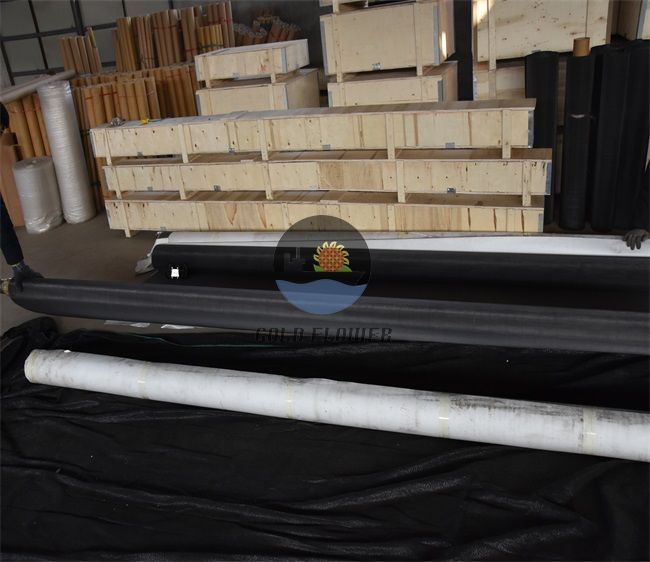
For CE, remember: a mesh roll itself typically isn’t CE-marked; the finished machine/pressure assembly is. Still, the paperwork matters—EN 10204 3.1 material certs, ISO 9001 QMS, RoHS/REACH statements, and test data (aperture verification per ISO 9044; mechanical per ISO 6892-1; sieve conformity per ASTM E2016). If your build demands food-contact or PED/Machinery assessments, the mesh supplier should provide data that feeds your Technical File. That keeps your ce certification 250 micron stainless steel mesh procurement clean and audit-friendly.
Customization? East Industry cuts to width, supplies Dutch weave for finer retention, and can sinter multi-layers when you need rigidity (I’d ask for helium leak or bubble-point data if you go that route). For corrosive wet duty at 250 µm, 316L is still a safe pick; for heat, ce certification 250 micron stainless steel mesh in FeCrAl is the workhorse.
Citations
- ISO 9044: Industrial wire screens and woven wire cloth — Requirements and tests
- ASTM E2016: Standard Specification for Industrial Woven Wire Cloth
- European Commission: CE marking overview
- ISO 6892-1: Metallic materials — Tensile testing
- EU “Blue Guide” on CE marking
- ASTM F316: Pore size by bubble point and gas diffusion
share
Latest news
-
The Complete Guide to Decorative Mesh for B2B Decision Makers
NewsDec.08,2025
-
Weave Mesh Solutions for Industrial Applications | Wire Mesh BST
NewsDec.08,2025
-
Crimped Mesh: Durable, Versatile Metal Mesh for Global Industrial & Humanitarian Use
NewsDec.08,2025
-
Copper Mesh for Industrial Use – Reliable & Customizable Solutions
NewsDec.08,2025
-
Brass Mesh Solutions for Industry | Wiremeshbst.com Durable & Customizable
NewsDec.07,2025
-
Durable Wire Screen Solutions for Industrial Applications | WireMeshBST
NewsDec.07,2025
 English
  Belarusian
  Czech
Czech  Danish
  Dutch
Dutch  Esperanto
  Finnish
  French
  German
  Hungarian
  Icelandic
  Irish
Irish  Italian
  Norwegian
  Polish
  Russian
  Spanish
  Swedish
  Turkish
  Ukrainian