

Sep . 30, 2025 10:50 Back to list
Why Choose Our Wire Mesh Filters—Durable, Precise, Custom?
Medicine Filtration Wire Mesh: what’s changing, what still works
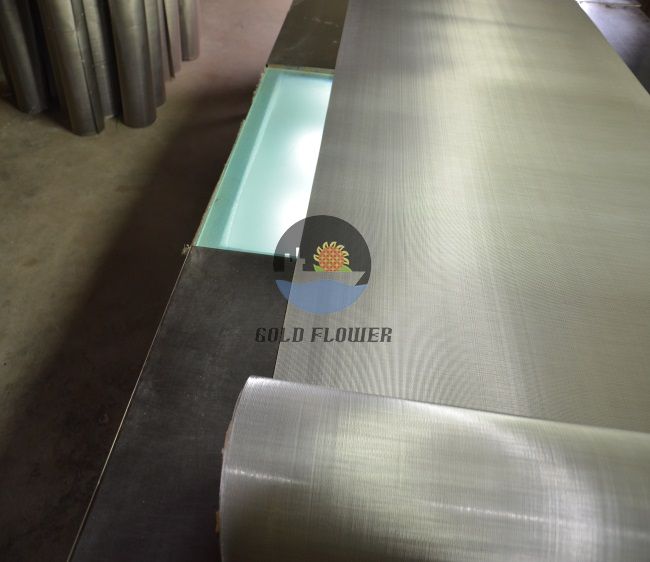
If you’ve worked a production line, you already know: wire mesh filters sit quietly between a smooth shift and an emergency shutdown. The Medicine Filtration Wire Mesh from East Industry (Anping City, Hebei, China) is one of those unflashy components that, to be honest, decides whether a batch passes QA.
What’s trending right now
Three shifts I’m seeing on factory floors: (1) migration from 304 to 316L for CIP/SIP reliability; (2) tighter weave control for repeatable microns; and (3) traceability—EN 10204 3.1 MTCs are now table stakes. In pharma and food, customers say they also want surface finish data, not just mesh counts.
Technical backbone (short version)
East Industry’s spec covers AISI 321/302/304/304L/316/316L stainless, black wire, and high-temp alloys like Al5Cr23, Ni80Cr20, Ni60Cr15. Weaves include plain dutch, twilled dutch, reverse dutch, and five-heddle—each chosen for different cut-points and pressure-drop behavior. Characteristics? Acid/alkali/heat/wear resistance—no surprises, but the consistency is the story.
| Parameter | Typical options/values | Notes (≈ real-world) |
|---|---|---|
| Material | 304/304L, 316/316L, 321; Ni80Cr20, Ni60Cr15; Al5Cr23; black wire | 316L favored for pharma lines; Ni alloys for ≥800°C service |
| Weave | Plain Dutch, Twilled Dutch, Reverse Dutch, Five-heddle | Twilled Dutch ≈ finer filtration at lower ΔP than plain |
| Mesh range | ≈ 20–635 mesh | Selection depends on cut-point and viscosity |
| Filtration rating | ≈ 5–200 μm (application-based) | Final rating validated by bubble-point/flow tests |
| Operating temp | Up to ~500°C (316L); higher for Ni alloys | CIP/SIP compatible; confirm with media chemistry |
| Standards | ASTM E2016, ISO 9044 | QA audits request these on certs |
Process flow (how it’s built)
- Material selection: certified 316L/304L or specialty alloys (EN 10204 3.1 traceability).
- Weaving: controlled tension for Dutch/twilled patterns; five-heddle for robust backwash cycles.
- Heat treatment/anneal (as needed), degreasing, and ultrasonic cleaning.
- Calendering/flattening for uniform thickness; slitting and cutting to size.
- Fabrication: pleating, spot welding, edge sealing, and gasket pairing.
- Testing: mesh count per ASTM E2016, pore-size by ASTM F316 (bubble point), ΔP flow curves, and corrosion checks (typ. salt-spray screening on request).
Where they’re used (quick tour)
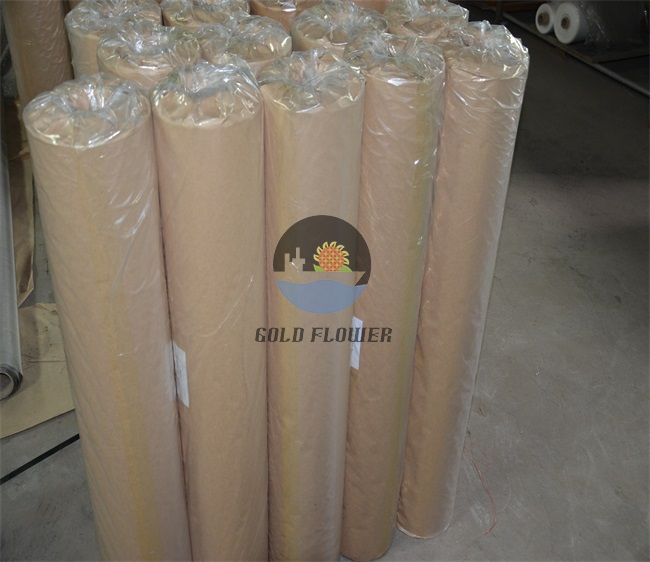
Mining slurries, oil and chemical units, food lines, pharmaceutical filtration, machine-making, labs, even aviation hydraulics. In pharma, wire mesh filters often serve as prefilters upstream of membranes—catching gels, fibers, and undissolved bits so the expensive elements last longer.
Mini case study
A syrup line (pH 6–7, 45–85°C CIP) swapped a legacy 304 plain-dutch screen for 316L twilled-dutch ≈ 10–15 μm. Result: average differential pressure dropped ~18% at the same flow, and cleaning intervals extended from daily to every 2–3 days. QC noted fewer visible specks; operators, fewer alarms. Not dramatic, but it pays back in a month—sometimes less.
What buyers compare (and what actually matters)
| Vendor | Lead time | Customization | Certs/Docs | Indicative cost |
|---|---|---|---|---|
| East Industry (Anping) | ≈ 7–20 days | Weave, alloy, cut size, pleat packs | ISO 9001, ASTM/ISO conformance, EN 10204 3.1 | $$ (balanced) |
| Regional fabricator | ≈ 3–10 days | Good; limited in exotic alloys | Basic test reports | $$$ |
| Trading company | ≈ 15–35 days | Varies; check traceability | Varies by mill | $–$$ |
It seems that the big differentiators are weave accuracy (ISO 9044), documented pore-size testing (ASTM F316), and cleanability. Many customers say they’ll pay a little more for stable ΔP curves.
Testing, service life, and compliance
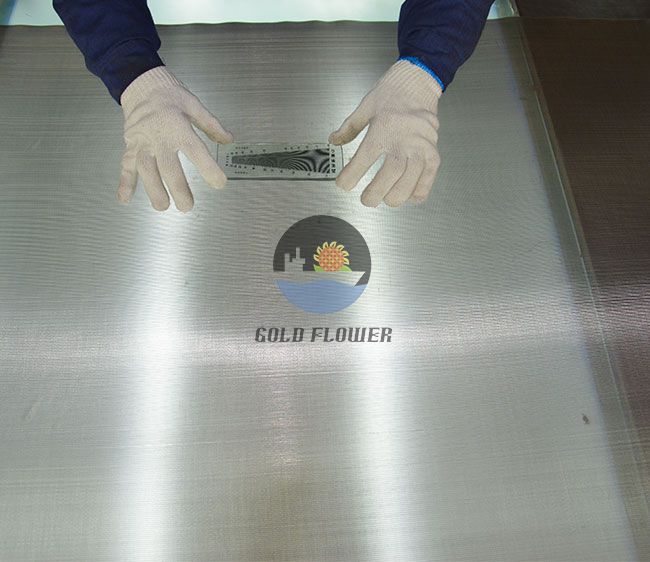
- Verification: mesh count (ASTM E2016), pore-size via bubble point (ASTM F316), multi-pass efficiency where relevant (ISO 16889 for hydraulic loops).
- Service life: around 6–24 months in pharma prefiltration; real-world use may vary with CIP chemistry and backwash frequency.
- Compliance: ISO 9001 QMS, material certs (EN 10204 3.1). For bioprocess lines, align with ASME BPE practices and site validation.
Final thought: wire mesh filters don’t need to be the hero—just predictable. East Industry’s Medicine Filtration Wire Mesh keeps showing up with the right paperwork and repeatable weaves. Honestly, that’s what production wants.
Authoritative citations
- ASTM E2016 – Standard Specification for Industrial Woven Wire Cloth. https://www.astm.org/e2016
- ISO 9044 – Industrial Woven Wire Cloth — Technical requirements and testing. https://www.iso.org/standard/44371.html
- ASTM F316 – Test Methods for Pore Size Characteristics by Bubble Point and Mean Flow. https://www.astm.org/f0316
- ISO 16889 – Hydraulic fluid power filters — Multi-pass method. https://www.iso.org/standard/36974.html
- EN 10204 – Metallic products — Types of inspection documents. https://standards.cen.eu
- ASME BPE – Bioprocessing Equipment Standard. https://www.asme.org/codes-standards/find-codes-standards/bpe
share
Latest news
-
The Complete Guide to Decorative Mesh for B2B Decision Makers
NewsDec.08,2025
-
Weave Mesh Solutions for Industrial Applications | Wire Mesh BST
NewsDec.08,2025
-
Crimped Mesh: Durable, Versatile Metal Mesh for Global Industrial & Humanitarian Use
NewsDec.08,2025
-
Copper Mesh for Industrial Use – Reliable & Customizable Solutions
NewsDec.08,2025
-
Brass Mesh Solutions for Industry | Wiremeshbst.com Durable & Customizable
NewsDec.07,2025
-
Durable Wire Screen Solutions for Industrial Applications | WireMeshBST
NewsDec.07,2025
 English
  Belarusian
  Czech
Czech  Danish
  Dutch
Dutch  Esperanto
  Finnish
  French
  German
  Hungarian
  Icelandic
  Irish
Irish  Italian
  Norwegian
  Polish
  Russian
  Spanish
  Swedish
  Turkish
  Ukrainian